
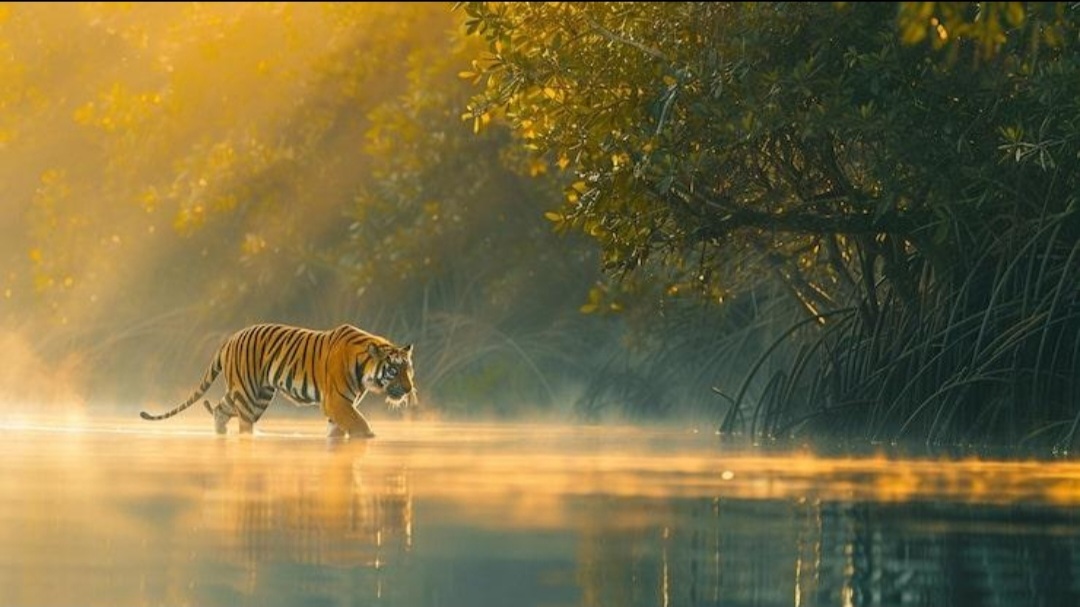
Discover the incredible wildlife of the Sundarbans, from the legendary Royal Bengal Tiger and spotted deer to saltwater crocodiles, river dolphins, monkeys, and colorful birds. Explore the fascinating animals of Bangladesh's largest mangrove forest and learn what makes a Sundarban wildlife tour an unforgettable nature experience.
Wildlife of the Sundarbans: Discover the Royal Bengal Tiger and the Hidden Wonders of Nature
Deep inside a world of winding rivers, mysterious creeks, and endless mangrove forests lives one of the most fascinating wildlife communities on Earth.
Welcome to the Sundarbans — the legendary home of the Royal Bengal Tiger.
Located in southwestern Bangladesh, the Sundarbans is part of the world's largest contiguous mangrove forest and a UNESCO World Heritage Site. Its extraordinary ecosystem provides shelter to an incredible variety of mammals, reptiles, fish, birds, and other wildlife.
For nature lovers and wildlife enthusiasts, exploring the Sundarbans is an opportunity to discover a world where nature still follows its own rhythm.
But the tiger is only the beginning. From spotted deer quietly moving through the forest to crocodiles resting beside tidal rivers, every corner of this remarkable wilderness has a story to tell.
Let's discover the amazing wildlife of the Sundarbans.
1. Royal Bengal Tiger — The Legendary King of the Mangroves
The Royal Bengal Tiger is undoubtedly the most iconic animal of the Sundarbans.
Unlike tigers living in many other habitats, Sundarbans tigers have adapted to a unique environment of tidal rivers, muddy banks, dense mangroves, and changing water levels.
Their powerful bodies, remarkable swimming abilities, and extraordinary hunting skills make them perfectly adapted to this challenging ecosystem.
The tiger is also a symbol of the natural heritage of Bangladesh and an important part of the ecological balance of the forest.
Can you see a Royal Bengal Tiger during a Sundarban tour?
Tiger sightings are possible but extremely rare and unpredictable. The dense vegetation and secretive behavior of these animals make encounters difficult.
A Sundarban cruise is not a guaranteed tiger-watching safari. Instead, it offers an opportunity to explore the natural habitat of one of the world's most fascinating big cats.
Sometimes, even discovering fresh animal tracks along a muddy riverbank can make the experience unforgettable.
2. Spotted Deer — The Graceful Beauty of the Forest
The spotted deer, also known as the chital, is among the most recognizable animals of the Sundarbans.
Their beautiful golden-brown coats, decorated with white spots, help them blend into the forest environment.
These deer are often found near forest edges, open areas, and riverbanks, where they search for food and remain alert to potential predators.
They are also an important part of the Sundarbans food chain, serving as one of the natural prey species of the Royal Bengal Tiger.
Watching a group of spotted deer quietly moving through the greenery is one of the beautiful moments that nature lovers hope to experience.
3. Saltwater Crocodile — The Powerful River Predator
The Sundarbans is home to the estuarine crocodile, commonly known as the saltwater crocodile.
These impressive reptiles inhabit rivers, creeks, and tidal waterways throughout suitable parts of the mangrove ecosystem.
They are powerful aquatic predators with strong jaws and excellent swimming abilities.
Sometimes, visitors may spot a crocodile resting quietly along a muddy riverbank or partially submerged in the water.
However, they are wild and potentially dangerous animals. Visitors should always remain aboard authorized boats or follow designated safety instructions.
4. River Dolphins — A Magical Sight on the Water
The waterways of the Sundarbans support fascinating aquatic wildlife, including the Ganges River Dolphin and Irrawaddy Dolphin.
These remarkable mammals are especially interesting because they depend on healthy river ecosystems.
A dolphin briefly appearing at the water's surface can become one of the most memorable moments of a river journey.
However, dolphin encounters are never guaranteed. Their movements depend on natural conditions, food availability, and habitat.
Keeping a respectful distance and avoiding disturbance is essential for their protection.
5. Monkeys — The Energetic Residents of the Mangroves
Rhesus macaques are among the mammals found in the Sundarbans.
They can often be seen moving between branches, searching for food, or observing their surroundings from the trees.
Their playful movements and social behavior provide interesting opportunities for wildlife observation.
Although they may look friendly, they are wild animals. Never attempt to feed or touch them.
6. Birds of the Sundarbans — A Paradise for Bird Lovers
The Sundarbans is also an extraordinary destination for birdwatchers and photographers.
Its rivers, mudflats, mangrove trees, and coastal habitats provide food and shelter for numerous resident and migratory bird species.
Some fascinating birds associated with the Sundarbans include:
- Kingfishers: Known for their colorful feathers and impressive fishing abilities. - White-bellied Sea Eagles: Majestic birds of prey often associated with coastal and river environments. - Herons and Egrets: Frequently seen searching for fish along shallow waterways. - Storks: Large wading birds that inhabit wetlands and muddy areas. - Pallas's Fish Eagle: A remarkable and threatened bird of prey. - Masked Finfoot: A rare and globally threatened bird associated with freshwater and mangrove habitats.
For photographers, the combination of birds, reflections, green vegetation, and golden sunlight creates beautiful opportunities throughout a river journey.
7. Monitor Lizards and Other Reptiles
Beyond the tiger and crocodile, the Sundarbans supports a fascinating range of reptiles.
Water monitor lizards are among the notable species found in the forest. They can be seen around waterways, muddy banks, and suitable forest habitats.
The ecosystem also supports various snake and turtle species, including some that are threatened.
These animals play important roles in maintaining the ecological balance of the mangrove forest.
Visitors should never attempt to approach, handle, or disturb reptiles.
8. Why Is the Sundarbans Such an Important Wildlife Habitat?
The Sundarbans is not simply a collection of trees and rivers. It is a complex natural ecosystem where freshwater, saltwater, tides, mudflats, and mangrove vegetation interact.
Its importance extends far beyond wildlife tourism.
A Natural Shelter for Wildlife
The dense mangrove vegetation and waterways provide essential habitats for numerous animal species.
A Nursery for Aquatic Life
The waterways and coastal environments support fish, crustaceans, and other aquatic organisms.
A Natural Coastal Barrier
The mangrove forest helps protect coastal landscapes by reducing the impact of waves, tidal surges, and storms.
A Valuable Natural Heritage
Its ecological importance makes the Sundarbans one of the most significant natural heritage areas in Bangladesh and the world.
9. Where Can You Experience Sundarban Wildlife?
Several designated eco-tourism destinations offer opportunities to experience different aspects of the forest.
Karamjal
A popular eco-tourism destination where visitors can explore mangrove surroundings, walking trails, and wildlife-related facilities.
Harbaria
Known for its forest environment, mangrove vegetation, and peaceful walking trails.
Katka
An attractive destination for nature enthusiasts, with beautiful forest scenery and wildlife habitats.
Kochikhali
A remote forest destination offering a distinctive wilderness atmosphere.
Hiron Point (Nilkamal)
A well-known destination surrounded by waterways and mangrove habitats.
Dublar Char
An interesting coastal destination with fishing activities, natural scenery, and a distinctive local atmosphere.
The actual destinations included in a tour depend on the approved route, weather, permits, and Forest Department instructions.
10. How to Experience Sundarban Wildlife Responsibly
The Sundarbans is a protected natural environment, not a zoo or a theme park.
Every visitor has a responsibility to help preserve its wildlife.
Follow these important guidelines:
1. Travel through authorized operators and permitted routes. 2. Follow your guide's and Forest Department officials' instructions. 3. Never feed wild animals. 4. Avoid loud noises that may disturb wildlife. 5. Never throw plastic or other waste into the forest or waterways. 6. Do not attempt to approach, chase, or photograph animals from unsafe distances. 7. Respect restricted areas and wildlife conservation rules.
Responsible tourism helps protect the natural environment for future generations.
11. Experience the Wild Beauty with The Jungle Jatra
There is something special about travelling through the Sundarbans.
The gentle movement of a cruise boat, the endless greenery along the riverbanks, birds flying across the sky, and the possibility of discovering wildlife in its natural habitat create an experience unlike an ordinary holiday.
At The Jungle Jatra, we believe that every journey into the Sundarbans should bring travellers closer to the beauty of nature.
Whether you dream of exploring quiet mangrove creeks, watching birds, discovering the fascinating wildlife of Bangladesh, or enjoying a peaceful multi-day river cruise, the Sundarbans offers something truly memorable.
Explore our available Sundarban tour packages and discover a journey that matches your travel plans.
The forest is wild. The rivers are timeless. And every journey has a story.
The Jungle Jatra — Discover the Wild. Experience the Journey.
Frequently Asked Questions About Sundarban Wildlife
1. Is the Royal Bengal Tiger found in the Sundarbans?
Yes. The Sundarbans is one of the most important natural habitats of the Royal Bengal Tiger.
2. Can tourists see tigers during a Sundarban cruise?
It is possible but rare. Tiger sightings are never guaranteed because these animals are naturally elusive.
3. What other animals live in the Sundarbans?
The forest supports spotted deer, wild boars, monkeys, crocodiles, dolphins, monitor lizards, and numerous other species.
4. Are there dolphins in the Sundarbans?
Yes. The Sundarbans and its surrounding waterways support Ganges River Dolphins and Irrawaddy Dolphins.
5. Is the Sundarbans good for birdwatching?
Yes. Its mangrove forests, rivers, mudflats, and coastal habitats support a wide variety of resident and migratory birds.
6. Are crocodiles dangerous in the Sundarbans?
Yes. Estuarine crocodiles are powerful wild predators. Visitors should maintain a safe distance and follow all safety instructions.
7. What is the best way to explore Sundarban wildlife?
An authorized multi-day river cruise with permitted excursions and knowledgeable guides is one of the best ways to experience the forest.
8. Is wildlife spotting guaranteed on a Sundarban tour?
No. Wildlife is unpredictable. The purpose of a nature tour is to experience the ecosystem respectfully, not to guarantee encounters with particular animals.
Ready to discover the incredible wildlife of the Sundarbans?
Explore your next adventure with The Jungle Jatra and experience the natural beauty of Bangladesh.